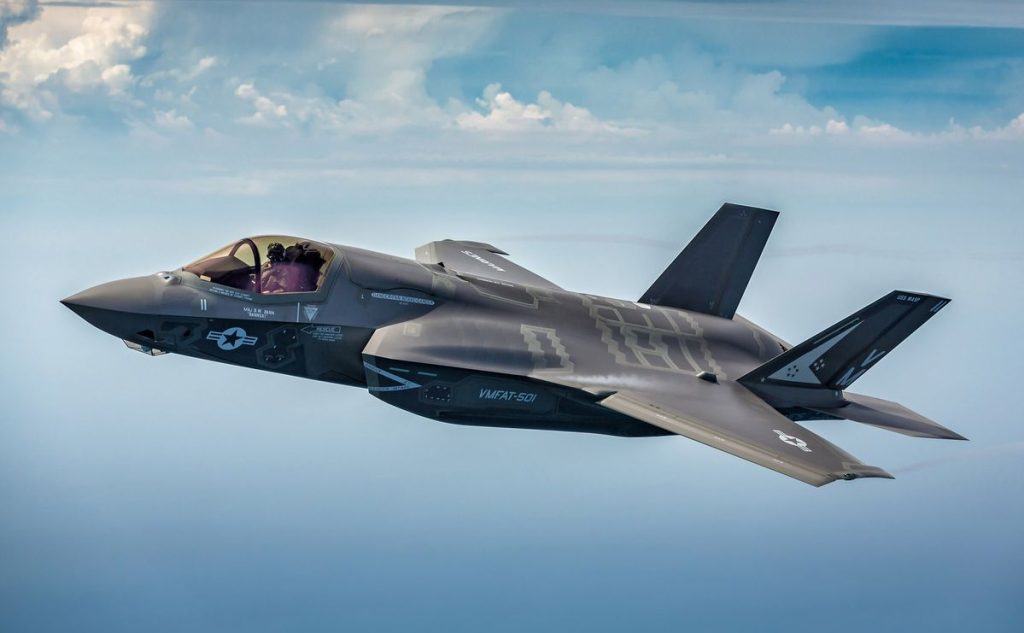
Israel is still the only country in the Middle East flying the F-35. Its version is called the F-35I Adir (“Mighty”). That exclusive status is a big part of what Washington calls Israel’s Qualitative Military Edge (QME) — the idea that Israel should keep a technology advantage even if neighbors have larger armies.
A proposed U.S. sale of 48 F-35s to Saudi Arabia would end that monopoly. That is why Israel, some U.S. lawmakers, and defense analysts are watching the deal closely.
What QME means in U.S. law
Since 2008, U.S. law has required presidents to check that major arms sales in the region do not erase Israel’s ability to defeat conventional threats. The State Department says the Saudi package “will not alter the military balance.” Israel is not so sure.
QME is not only about who owns the same jet. It is also about:
- How the jet is customized
- How well pilots have used it in combat
- What weapons and sensors are on board
- How fast more jets arrive
Why Israel’s F-35 is different
The U.S. has given Israel unusual permission to change the aircraft.
Public reporting says the Adir can use Israeli-made systems and weapons that standard export F-35s do not carry the same way. That includes Israeli electronic-warfare gear, locally developed munitions such as Rafael’s SPICE family, and closer links to Israeli command and intelligence networks. Israel has also been allowed to fly some missions with weapons on external pylons, something other operators rarely do in combat.
Israel also has combat hours that no other Middle East air force has on the F-35. Israeli media and officials say the Adir has been used in long-range missions, including strikes linked to Iran in recent years. That experience — tactics, maintenance, and real targeting — is hard to copy just by buying the airframe.
Numbers: Israel still ahead, but the gap narrows
Israel has bought F-35s in several batches and is expanding the fleet toward about 75 aircraft in the coming years, with more jets expected from 2028. Saudi Arabia’s proposed first package is 48 jets. Even if the deal is signed soon, Israeli sources say Riyadh would not get the first aircraft for about five years.
So Israel would keep a lead in numbers and experience for some time. The political issue is the loss of being the only stealth-fighter operator next door.
What Israel wants in return
Israeli officials told local media they would rather no other regional country get the F-35. If the sale goes ahead, Israel is expected to ask Washington for compensation: weapons or programs the U.S. has so far held back, plus deeper joint work on systems such as future Arrow interceptors.
Some Israeli leaders had also wanted the sale tied to Saudi-Israel normalization. The Trump administration has moved the jet deal forward without that link.
U.S. officials have suggested Saudi jets could be a downgraded export version, not a full Adir. President Trump has publicly said the planes would be “pretty similar,” which unsettled people who want a clear gap kept.
The China problem sits on top of QME
A separate U.S. intelligence concern is that Chinese ties with Saudi Arabia — including Chinese telecom gear — could put F-35 technology at risk. That is not Israel’s QME law, but it adds another reason some in Congress oppose the sale.
Bottom line
Israel’s F-35 edge today is four things at once:
- It is the only regional operator
- Its jets are more customized than a normal export F-35
- Its pilots have used them in real high-end missions
- U.S. law is supposed to protect that advantage
Selling F-35s to Saudi Arabia would not instantly erase that edge. It would end exclusivity and force Washington to prove, in writing and in hardware, that Israel still flies a more capable jet with better weapons, training, and support.
Sources: JTA, Jerusalem Post, Israel Hayom, Defense.info, U.S. State Department statements