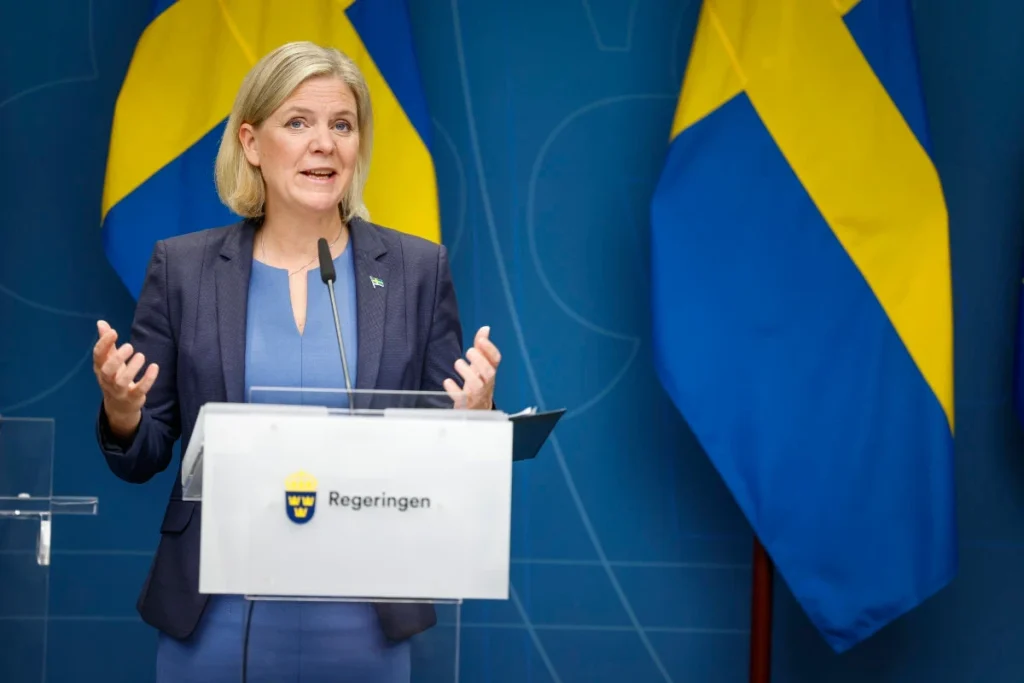
Sweden’s election was close, and the government talks that followed are proving no easier. On Tuesday, Social Democratic leader Magdalena Andersson told the country she had failed for a second time to assemble a government.
Andersson said that, despite some progress, she did not believe the conditions existed to form a government that parliament would tolerate, according to Al Jazeera. The announcement came nearly a month after the vote.
A vote she is expected to lose
Parliament speaker Andreas Norlen had asked Andersson to test whether a government was possible. After she reported back,
he said a vote on making her prime minister would still go ahead on Thursday
. Al Jazeera reports that he acknowledged she would probably lose it.
Euronews reports that Norlen first gave Andersson the task on 18 September. She gave up on 28 September, after she could not unite the other three parties in her group. Her second mandate began with no clear change in their positions.
Why the bloc cannot agree
The numbers are tight. According to Al Jazeera, the centre-left opposition bloc narrowly beat outgoing Prime Minister Ulf Kristersson’s right-wing bloc, winning 176 seats to 173.
A majority on paper has not turned into a cabinet. The Centre Party has said it will oppose any government that gives ministerial posts to the Left Party. The Left Party, for its part, has insisted it will support only a left-wing government that it belongs to.
Each side’s condition rules out the other’s. Andersson has not been able to bridge that gap in two attempts.
What comes next
HNGN reports that Kristersson is expected to be handed the next attempt, even though his bloc lacks a majority. That report also raises the possibility of a snap election. The excerpts available did not spell out the procedure or timetable, and neither Norlen nor the parties had confirmed such a step in the coverage reviewed.
Voice of Vienna describes the situation as a deepening stalemate. The outcome of Thursday’s vote will show how far the parties are from a workable arrangement. Sweden’s parliamentary rules and the speaker’s next move will decide what follows.
For now, Kristersson’s government remains in office as the outgoing administration, as the reports describe it. Neither bloc has shown a route to the support it needs in parliament.
Two readings of the impasse
Supporters of Andersson’s approach point to the result: the centre-left parties collectively won more seats than the right. On that view, the voters chose change, and the smaller parties should find a compromise.
The Centre Party and the Left Party describe their positions as matters of principle rather than bargaining. Each says it cannot accept the other’s role. The coverage reviewed did not include fresh statements from either party on Tuesday’s outcome.
The right-wing bloc, meanwhile, has watched its opponents struggle. It has not yet shown that it can command a majority of its own, which the reports say it lacks.
Thursday’s vote is expected to confirm what Andersson has already said. After that, the question passes back to the speaker.