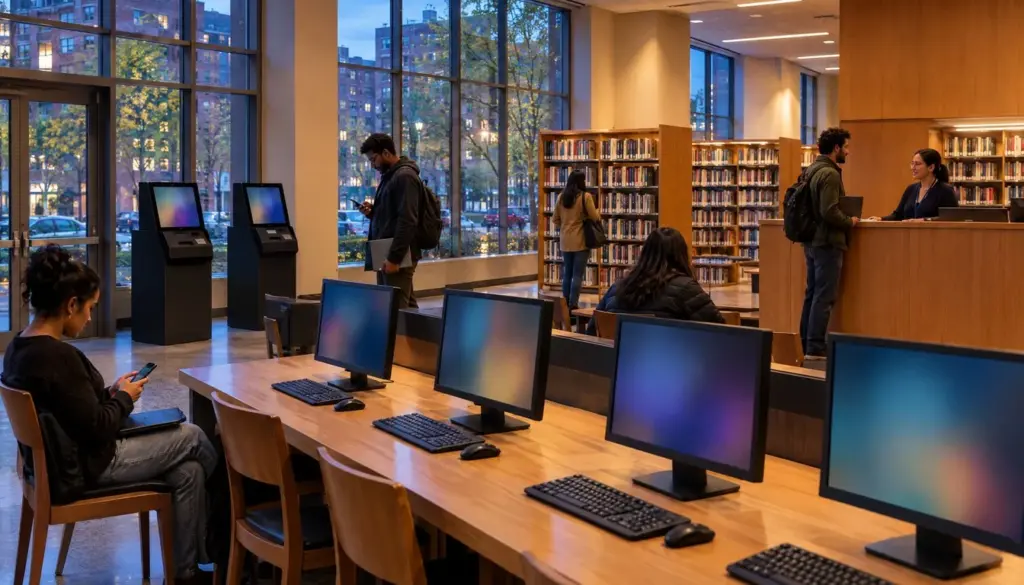
For many people in Queens, the local library is where they get online. Early this month, ransomware hit those systems.
According to Check Point Research’s threat intelligence report for the week of 9 November, Queens Public Library was hit by a ransomware attack that encrypted its systems. The library serves about 2.3 million residents in New York City. Check Point said the attack disrupted public computers, Wi-Fi and checkout services.
KonBriefing, which tracks cyber incidents, dates the attack to 3 November. It reports that the library’s website, mobile app, public computers, Wi-Fi and checkout systems were temporarily unavailable across all 66 branches.
What is still unknown
The reports we reviewed leave several questions open. They do not name a ransomware group. They do not say whether a ransom was demanded or paid. They also do not say whether any patron or staff data was copied before the systems were encrypted.
That last point matters. Many ransomware gangs now steal data before locking files, then threaten to publish it to put pressure on the victim. Nothing in the available reporting confirms that happened in Queens. It also hasn’t been ruled out. Library systems usually hold names, addresses, email addresses, phone numbers and borrowing records. Readers should treat any claims about leaked data with caution until the library or investigators confirm them.
The sources also don’t say whether every service has been fully restored. KonBriefing describes the outages as temporary.
Part of a busy fortnight for attackers
The library attack was one of several serious incidents in the same Check Point report. Russian web host Beget suffered a destructive attack on 1 November that wiped data across its cloud infrastructure and disrupted hundreds of websites. According to Check Point, more than 1,000 servers needed manual checks before they could be restored, and some backup data was reportedly destroyed.
The same report said OPSSHIELD, which makes the Linux security tool cPGuard, disclosed a supply-chain attack. Attackers used compromised credentials to push malicious updates on 2 November.
Public bodies keep appearing on incident lists. KonBriefing’s November tracker also records a ransomware attack on a municipal legislature in Brazil on 2 November. Over the following days it logs incidents at a Swiss medical centre and at the Port of Santos authority in Brazil.
Why libraries are exposed
Public libraries combine a large user base with open-access computers, public Wi-Fi and limited IT budgets. When their systems go down, the damage goes beyond inconvenience. People who rely on library computers for job applications, benefits forms or schoolwork can lose access until services return.
These attacks can also send out a second wave of harm. Once a well-known organisation has been hit, scammers often send fake “security notices” or “account verification” emails that pretend to come from it. They count on people expecting to hear from the organisation after the news.
What library users can do now
The library hasn’t said patron data was affected. Even so, these basic steps will lower your risk:
- Be wary of messages about the attack. Don’t click links in emails or texts claiming to be from the library about your account, overdue fines or a “data incident”. Check for updates by typing the library’s web address yourself or by calling a branch.
- Change reused passwords and PINs. If your library account password or PIN is the same as one you use anywhere else, change it on those other accounts, especially email and banking.
- Turn on two-step verification for your email account. Most account takeovers start there.
- Take care on public Wi-Fi and shared computers. When the library’s network and machines come back, avoid logging into banking or other sensitive accounts on them. Always sign out and close the browser when you finish.
- Watch for unexpected contact. If someone you don’t know calls or texts using your name and your library details, it could be a sign your information is in circulation. Don’t give out personal or payment details.
- Look for an official notice. If an investigation finds that personal data was taken, US organisations generally have to notify the people affected. A genuine notice won’t ask you for your password.
For other organisations, the Beget incident shows why backups matter. Backups only help if attackers can’t reach them. Copies kept offline or on separate systems, and tested regularly, are what let a victim rebuild without paying.
Ezetimes will update this story if Queens Public Library or investigators confirm whether any personal information was accessed.