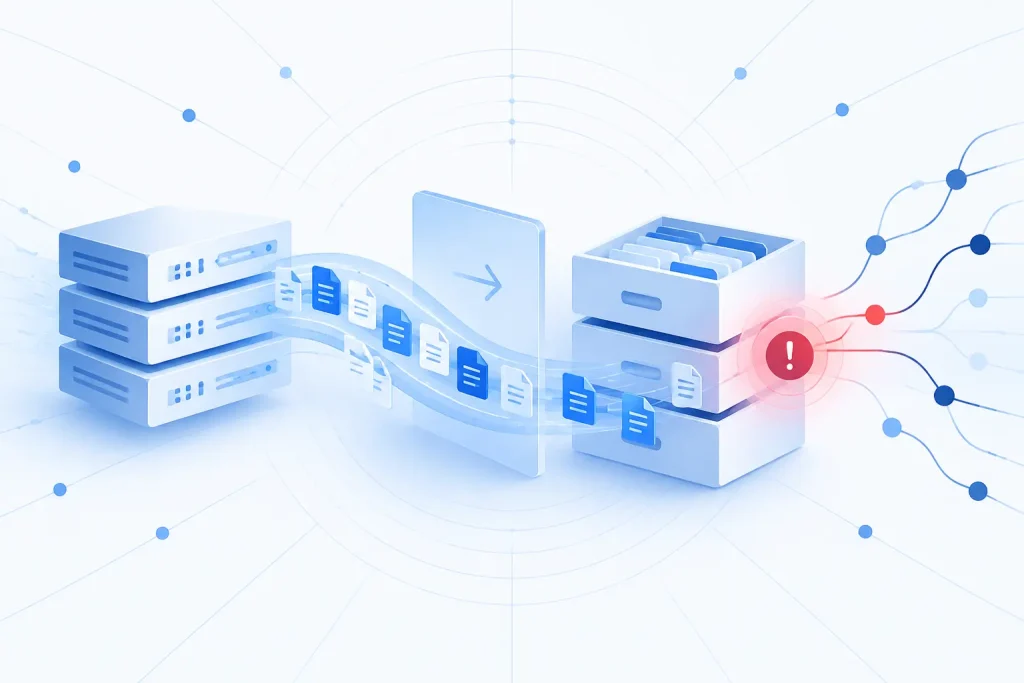
A routine server move in early 2025 is now the root of a data breach at DigiCert, one of the world’s largest issuers of website security certificates. The company has begun notifying customers that their personal details, and in some cases scanned identity documents, were accessed by unauthorised people.
The notices began circulating this week. Cloud architect Fabian Bader shared a copy on X, according to BleepingComputer, with a sarcastic note that the leak was “limited” to his full personal data and any verification documents he had submitted.
What happened
According to DigiCert’s incident report, as summarised by Cyber Daily and OODAloop, the trouble began with an infrastructure migration in February 2025. An internal business system was moved from a network segment restricted by a VPN. In the process it became reachable from the internet, without the security review that should have caught it.
SC Media’s summary of the BleepingComputer report adds that the system had a self-registration feature that let outside users create accounts. An authorisation flaw then allowed those accounts to read archived customer data. That access took place between 27 June and 2 July 2026, the report says.
DigiCert reportedly spotted the unauthorised accounts in June 2026 but first treated the event as a minor account-creation problem rather than a data-access incident. A deeper investigation, concluded on 19 October, confirmed that data had been compromised. The company says it fixed the authorisation gap in July and has disabled self-registration and tightened access controls.
What was exposed
The notification says the information was limited to names, business email addresses, phone numbers and business addresses shared with DigiCert. If a customer supplied one, it may also have included an identification document, such as a driver’s licence, passport, utility bill or other paper showing a name and address.
DigiCert describes the affected material as a small portion of its archived customer data. It has not said how many people, organisations or documents are involved, according to Cyber Daily. It is still reviewing identification documents to work out who was affected and has said it will notify those people once that review is done.
What was not affected
The company says its core certificate authority services, including CertCentral and DigiCert ONE, were not compromised. It also says customer login credentials and issued certificates were safe. Access was read-only and archival, and did not allow anyone to validate, approve or issue certificates, DigiCert said, as quoted by Cyber Daily.
That distinction matters for a certificate authority, whose products underpin trust in websites. On the available reporting, the exposure is a privacy problem for customers rather than a threat to the certificates themselves. Those claims come from DigiCert; no independent verification was found in the sources reviewed.
What customers can do
The company has not detailed specific steps beyond its notices. These are general precautions, not DigiCert guidance.
- Expect targeted phishing. Names, work emails and phone numbers are enough for a convincing fake message about a certificate renewal or an account problem. Go to the provider’s site directly rather than clicking links.
- Treat ID exposure seriously. If a passport or driving licence scan was uploaded for verification, watch for new accounts or credit applications in your name. Consider a credit report check or fraud alert where your country offers one.
- Check who is writing to you. The breach notices came from DigiCert itself. Be wary of any follow-up that asks for payment, passwords or fresh document uploads.
- Ask about replacement. If your passport number was exposed, contact the issuing authority to ask whether anything further is advised.
- Review what you upload. Where a verification process allows alternatives, share the minimum needed and ask how long the documents are kept.
A slow-moving disclosure
The timeline is worth noting. The exposure existed for roughly 17 months before the fix, and the confirmed access came about four months before customers were told. DigiCert acknowledged, according to BleepingComputer, that the incident was first handled as an account-creation issue rather than a data-access event.
Customers who have not received a notice may still hear from the company, since the document review is continuing. Anyone who has submitted identity paperwork to DigiCert for validation should keep an eye on their inbox, and on the sender’s address, in the coming weeks.