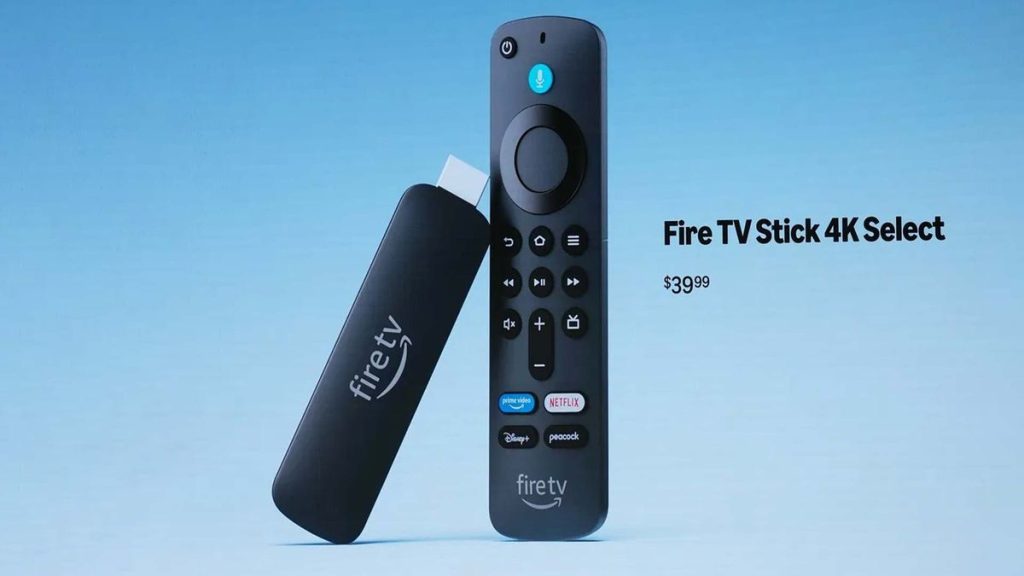
The most talked-about part of Amazon’s new streaming stick is the remote. That says something about how much else has stayed the same. The 2026 Fire TV Stick 4K is a modest hardware update with one big change underneath: it no longer runs an Android-based system. Ezetimes has not tested the device; this piece draws on Amazon’s announcement and early coverage.
What Amazon is claiming
Amazon says the stick is thinner and faster than its predecessor. According to the company, it is nearly 20–40% faster than a similarly priced 4K stick from another leading brand, measured from power-on to the start of playback. Apps launch more than 35% faster, and content starts nearly 20% faster. Amazon does not name the rival in the figures cited by Android Authority, and these are the company’s own tests.
Amazon also says the stick played content faster than three 4K smart TVs from top-selling brands, using the three most popular Fire TV apps.
Specs and price
The stick costs $59.99, according to eCoustics. TechCrunch lists a quad-core 1.7 GHz processor, Wi-Fi 6, Bluetooth 5.3 and Bluetooth Low Energy. How To Geek reports 8GB of storage.
It outputs 4K at up to 60 frames per second and supports HDR10, HDR10+ and HLG. There is no Dolby Vision. Both How To Geek and eCoustics point this out, and the gap matters because the pricier Fire TV 4K Max and Fire TV Cube do support it, along with Wi-Fi 6E and 16GB of storage.
The new feature is Direct Power. The stick can draw power from the TV’s USB port, so a separate cable and wall adapter may not be needed. eCoustics notes that Roku already offers this on some sticks, but says it makes installation considerably less messy for Amazon’s mainstream 4K model. Cord Cutters News adds that earlier sticks often failed on TV USB ports, triggering insufficient-power warnings.
The remote
The redesigned remote has differently shaped, indented buttons meant to be found by touch. TechCrunch’s headline calls it “actually good”, and the site says the big blue Alexa button is gone. In its place are a home button you can feel in the dark and a button for adding favorites.
Cord Cutters News describes the design as refined rather than reinvented: a squarer top, a rounder bottom, an orange accent on the home button and a smaller microphone icon. It says the change reduces accidental voice activations. The remote is included, and eCoustics lists it at $14.99 separately. A Fire TV Remote Plus, with an aluminum body, backlit buttons and a Find My Remote feature, is due later and does not come in the box.
Vega OS is the real story
The stick runs Vega OS, Amazon’s Linux-based platform that is gradually replacing the Android-derived Fire OS. Cord Cutters News says the consequence is that the old ability to sideload third-party apps is gone. For buyers who relied on that, it may settle the question. For people who only open Netflix, Prime Video or YouTube, it may never come up.
That reviewer found the interface responsive, without the small hesitations of older base sticks. The same review notes that the home screen still gives a lot of space to recommended titles and sponsored placements, so it favors discovery and shopping over a clean list of installed apps.
eCoustics argues the software change may matter more than any hardware upgrade. It also says the stick is not far ahead of Roku and Google rivals on picture quality, since those support Dolby Vision, HDR10+ and Dolby Atmos on comparable models.
Who it suits
Going by the early coverage, the stick fits someone who wants a cheap, quick upgrade and a less fiddly setup, and who is already comfortable in Amazon’s ecosystem. Owners with a Dolby Vision TV, or anyone who likes to sideload apps, have reasons to look at the Max, the Cube or a competitor instead.
Amazon has also tried to simplify its lineup, so the choice between the stick, the Max and the Cube should be clearer. Fuller long-term testing and independent speed measurements are still to come, and the speed claims remain Amazon’s own for now.