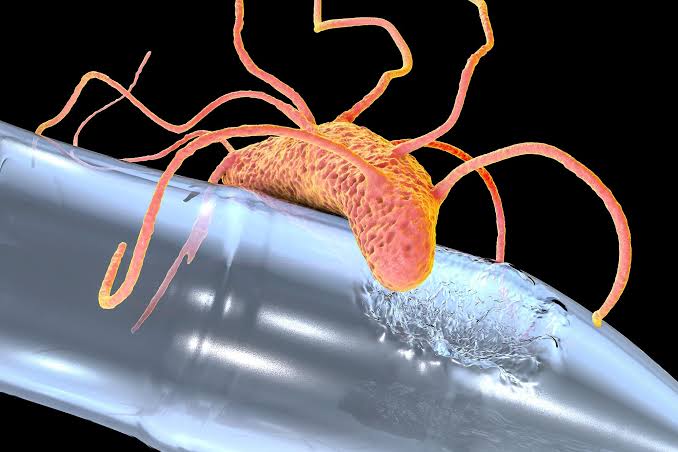
Researchers in Germany buried thin films of plant-based bioplastic in a patch of forest humus. A year later, the plastic was pitted with tiny holes, each about the size and shape of a single bacterial cell. Tracing what made them led to an enzyme that does two jobs: it chews up polyester plastic, and it can also cleave penicillin.
The work comes from the University of Konstanz and was published in The ISME Journal, according to the university. The team nicknamed its find the “Pac-Man enzyme” because of an unusually wide-open active site, the part of the molecule where the chemistry happens.
Burying plastic in the botanical garden
Microbiologists Harry Lerner and David Schleheck wanted to know whether microbial communities can fully break down a newer class of bioplastics called long-chain aliphatic polyesters, or LCAPs. The materials were developed by chemist Stefan Mecking’s group at the same university, which collaborated on the study. LCAPs are made from long-chain molecules derived from plant oils, as Sci.News describes them.
Lerner said the team put small pieces of LCAP film about ten centimetres deep in the upper humus layer of the university’s botanical garden forest. In the lab, they also mixed powdered polymers into forest soil and tracked carbon dioxide output as a measure of microbial respiration. The experiments ran for a year.
Controls included cellulose, two other bioplastics (PHBV and PCL), untreated soil and high-density polyethylene (HDPE), a common conventional plastic. The results were lopsided. According to the summary of the paper, forest-soil microbes completely degraded the aliphatic polyester bioplastics within roughly 250 to 330 days, while HDPE showed negligible breakdown.
An enzyme with a second talent
To find out which microbes and enzymes were responsible, Lerner extracted DNA from the soil communities and analysed their combined genetic makeup, known as the metagenome. That turned up the new enzyme.
In lab tests, it split polyesters into their basic building blocks, called monomers. It also cut the beta-lactam ring in penicillin. That second ability was unexpected.
The enzyme’s structure resembles that of esterases, which break ester bonds such as those in polyesters. It also resembles beta-lactamases, the bacterial enzymes that disable penicillin-type antibiotics and make bacteria resistant. “Its structure resembles that of esterases, but also that of beta-lactamases,” Lerner said in the university’s release.
What it does and doesn’t show
The authors point to a known concern. The “plastisphere”, the biofilm community that forms on plastic surfaces, has been reported to carry unusually high levels of antibiotic resistance genes. The new enzyme suggests one possible reason: the same molecular tool could serve both purposes. The university says the finding gives a basis for further study of how plastic degradation and antibiotic resistance spread and evolve in the environment.
The evidence so far is from laboratory tests. The sources do not report that the enzyme confers antibiotic resistance on bacteria in nature, and the university’s wording is that it “might” do so. Nor does the work show a ready-made tool for cleaning up plastic waste.
The researchers also stress a practical limit. Microbes can only help if plastics contain bonds they can attack. Speeding up breakdown in the environment would mean using biodegradable plastics wherever possible, according to the university. Conventional plastics such as HDPE stayed largely intact in the same experiments.
The team says the discovery raises the possibility that microbes are adapting to plastic faster than assumed. Humans have put plastic into the environment in large quantities for only about 50 to 75 years, Schleheck noted. In that time, it has been available to bacteria, yeasts and fungi as a new source of carbon and energy.
The study was first announced by the University of Konstanz in September and has since been widely republished in science news outlets.