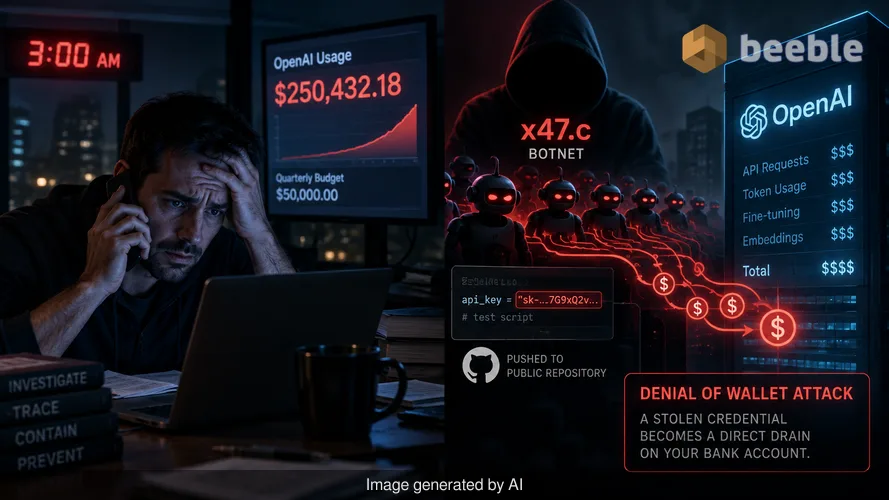
Security firm Qrator Labs says a Windows botnet package called x47.c is being sold with a feature that burns paid AI credits. Researchers published the finding in late September 2026 after reviewing ads, panel screenshots, and seller notes from an actor using the name WraithTools.
What the package claims to do
Sellers list the usual botnet extras: DDoS options, credential theft, and SOCKS5 proxies. One extra is labeled AI API drain.
In that mode, an operator who already has a valid API key for OpenAI, xAI, or a similar chat API can send many billable requests straight to the provider. The goal is not to knock a website offline. It is to empty credits or run up a bill. OWASP calls this kind of abuse denial of wallet. The site can stay up while the AI account behind it runs out of money.
Qrator notes that anyone with a leaked key could script the same thing. The botnet is a packaged way to do it at scale.
Prices in an early August ad ran from about $200 for a base kit to $950 for a fuller set that also claimed credential theft, proxies, and AI-assisted persistence. Some write-ups say an optional module uses Grok to pick from a short list of stay-hidden actions on an infected PC. That is the seller’s pitch, not an independent test of how well it works.
Why it matters
Companies now wire chat models into products. If an API key leaks, the bill can grow fast, especially if auto top-up is on. Blocking traffic at the app may not stop charges, because the requests go to the AI vendor, not through the customer’s website.
What Qrator recommends
- Revoke exposed keys
- Compare invoices with real usage
- Set hard spend caps
- Turn off or tightly limit automatic top-ups
This report is about a product advertised in underground markets. It is not a how-to, and it does not mean every AI bill spike is this botnet.
Sources: Qrator via SecurityWeek, Cybernews, Infosecurity Magazine