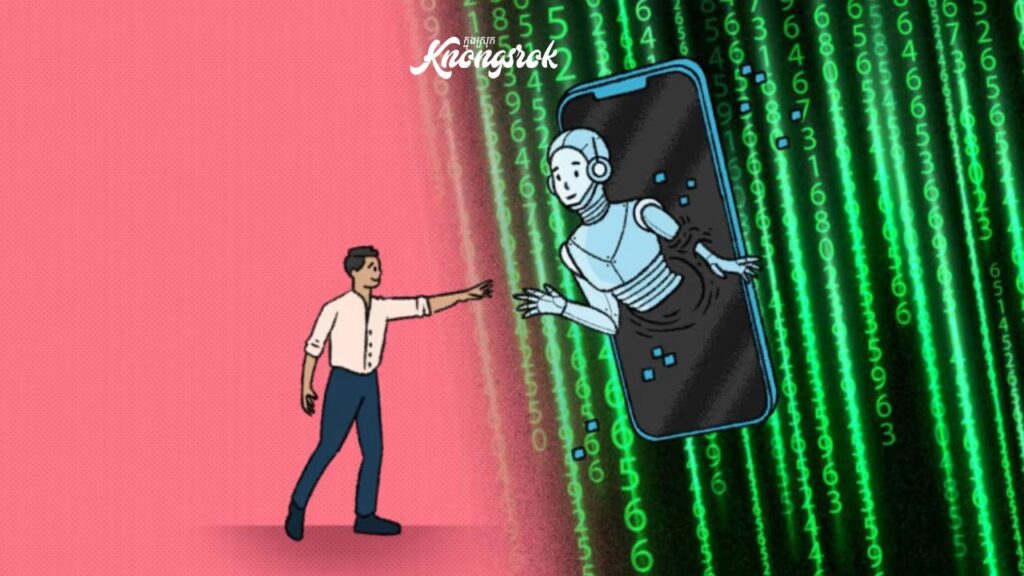
As AI technologies advance, integrating into roles traditionally held by humans—such as confidantes for emotional support, counsellors for mental health guidance, and even romantic partners—the implications for human relationships are profound and multifaceted. Drawing from recent studies, expert analyses, and public discourse, we can anticipate both enhancements and disruptions. While AI offers unprecedented accessibility and personalization, it risks eroding the depth of human connections, potentially leading to a society where emotional fulfillment is increasingly outsourced to machines. Below, I’ll explore the potential outcomes, balancing benefits, drawbacks, and long-term societal shifts.
Potential Benefits: Enhancing and Supplementing Human Bonds
AI companions can fill gaps in human relationships, particularly for those facing isolation or trauma. For instance, many users report that AI provides a non-judgmental space for vulnerability, allowing individuals to discuss sensitive topics without fear of rejection or criticism. This is especially valuable for survivors of abuse or infidelity, where AI acts as a “safe space” to rebuild emotional resilience before re-engaging with real people. Surveys indicate that 62% of users experience reduced loneliness through these interactions, suggesting AI could serve as a bridge to healthier human connections rather than a replacement.
Moreover, AI can help develop social skills and confidence. By simulating conversations, it prepares users for real-world interactions, much like a practice tool for introverts or those with social anxiety. In therapeutic contexts, AI-powered virtual counselors offer privacy-focused empathy and advice, addressing mental health needs in underserved areas. This scalability could democratize access to support, making “emotional labor” available on demand without the constraints of human availability or cost. For example, AI might evolve into do-it-all assistants or even “bedfellows,” providing consistent companionship that mirrors human intimacy in ways that are adaptive and infinitely patient.
In romantic spheres, AI partners could redefine desirability by prioritizing responsiveness over physicality or status, potentially empowering those marginalized in traditional dating markets. Parasocial relationships with AI aren’t entirely new—they parallel fandoms with celebrities or fictional characters, where emotional investment feels real despite one-sidedness. This could lead to healthier dynamics in human relationships by offloading routine emotional needs, freeing people to invest more deeply in meaningful human bonds.
Potential Drawbacks: Erosion of Authentic Connections
However, overreliance on AI poses significant risks. One major concern is that it could deepen isolation by dulling social motivation—the drive to pursue real human interactions. As AI becomes “better” than humans at providing validation and understanding—through hyper-personalized responses based on psychological profiling—people might prefer machines, leading to a decline in empathy and interpersonal skills. A recent survey found that 25% of young adults believe AI could fully replace real-life romance, signaling a generational shift where convenience trumps authenticity.
In mental health, AI counsellors may fall short. Studies show they often lack the nuanced effectiveness of human therapists and could exacerbate stigma by implying that emotional issues can be “fixed” algorithmically. For vulnerable groups like teenagers, whose critical thinking is still developing, AI companions risk distorting expectations of relationships, making human fragility seem inferior. Even in committed partnerships, secrecy around AI use—such as hiding “conversations” from spouses—could breed distrust, mirroring infidelity.
Broader societal effects include a potential devaluation of human charisma and desirability. As AI offers infinite patience without the messiness of real emotions, it might erode what makes human bonds unique: reciprocity, growth through conflict, and shared vulnerability. Ironically, in a world teeming with people, increasing loneliness drives this trend, with AI filling voids created by societal failures like widespread abuse or superficial connections.
Long-Term Implications: A Hybrid Future or Human Detachment?
Looking ahead, human relationships may become hybrid, blending AI and human elements. AI could augment bonds—e.g., integrating into family therapy or couple’s counseling—but at the risk of normalization. We might see legal debates over “marrying” AI, framed as a civil rights issue under banners like “Love Wins,” as machines become indistinguishable from humans in emotional depth. This could stratify society: premium human interactions for the elite, while the masses rely on affordable AI, widening inequality in emotional well-being.
On the darker side, unchecked adoption might lead to a “one-shot” psychological dependency, where AI’s perfection makes human flaws intolerable, accelerating detachment. Yet, as one expert notes, meaning in relationships may ultimately reside in the beholder’s experience, not the partner’s humanity—challenging us to redefine what “real” connection means.
In summary, AI’s rise as confidante, counsellor, and partner could enrich lives by addressing unmet needs but might fundamentally alter human relationships by prioritizing efficiency over authenticity. To mitigate harms, society should emphasize education, regulation (e.g., parental controls for minors), and fostering real-world connections. Ultimately, the outcome depends on how we integrate AI: as a tool to enhance humanity or a crutch that diminishes it.