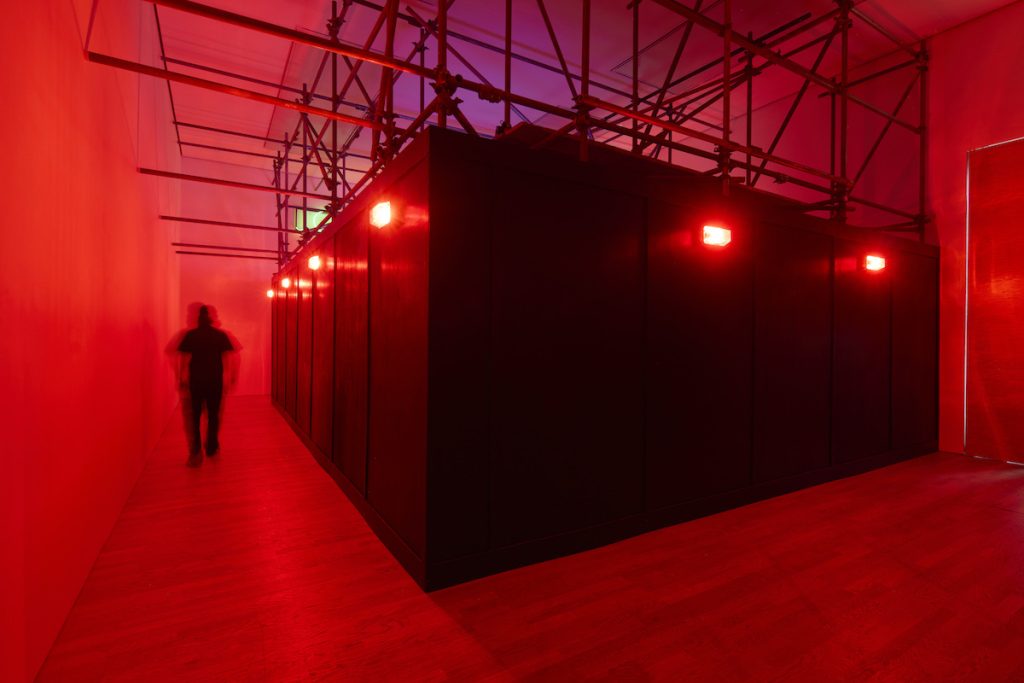
Crude oil sealed inside petrochemical-based containers, and raw pigment dug from the ground in Cornwall and Ghana. Those are among the materials in one of the four displays now open at the Turner Prize 2026 exhibition in Middlesbrough.
The show is at MIMA, the Middlesbrough Institute of Modern Art, which is part of Teesside University. According to Tate, it runs from 26 September 2026 to 29 March 2027. The winner will be announced at a ceremony at MIMA on 10 December.
The four artists
The shortlist is Simeon Barclay, Kira Freije, Marguerite Humeau and Tanoa Sasraku. Tate Britain, which runs the prize, says the winner receives £25,000 and each of the other three gets £10,000.
Barclay was nominated for The Ruin, a performance commissioned by the Roberts Institute of Art. It was also shown at the ICA in London, The Hepworth Wakefield and New Art Exchange in Nottingham. Tate describes his work as environments in which objects, architecture, sound, video and images collide, producing a personal and often humorous portrait of British culture. Artforum reports that the piece is a spoken-word performance drawing on his upbringing in industrial northern England. He is 51 and was born in Huddersfield.
Freije, 41 and born in London, was recognised for her first major institutional exhibition, “Unspeak the Chorus”, at The Hepworth Wakefield. Artforum notes it included life-size metal figures.
Sasraku’s presentation looks at what Tate calls the instruments and aesthetics of power behind “extractivism”, meaning the large-scale removal of natural resources for profit. That is where the pigment and the crude oil come in. Humeau is the fourth nominee.
A shortlist that divided critics
Not everyone welcomed the selection. Artforum reported that The Guardian called the list “a bit timid, a bit fearful, a bit safe”. It also reported that The Telegraph described it as a sign the prize had lost touch with the public. I have only Artforum’s account of those reviews, not the original pieces.
Alex Farquharson, director of Tate Britain and chair of the jury, defended the choices. He said the selection shows a “rich and diverse range of work” spanning installation and performance, with a strong emphasis on sculpture. In his words, each artist builds scenarios, real and imagined, that offer different ways to look at the world.
The jury’s comments on Barclay singled out the precision of his installation. It credited the clinical, minimalist display with conveying both irony and seriousness while addressing complex historical issues.
Why Middlesbrough matters
The prize is held every year outside London in alternating cities, and this year it is in a Tees Valley town better known for industry than for the art market. Tate says the prize, founded in 1984 and named after JMW Turner, aims to promote public debate about new developments in contemporary British art. It goes to a British artist for an outstanding exhibition or other presentation of their work.
This is the 42nd edition. Visitors have until late March to see the show, though the result will be known more than three months before it closes.