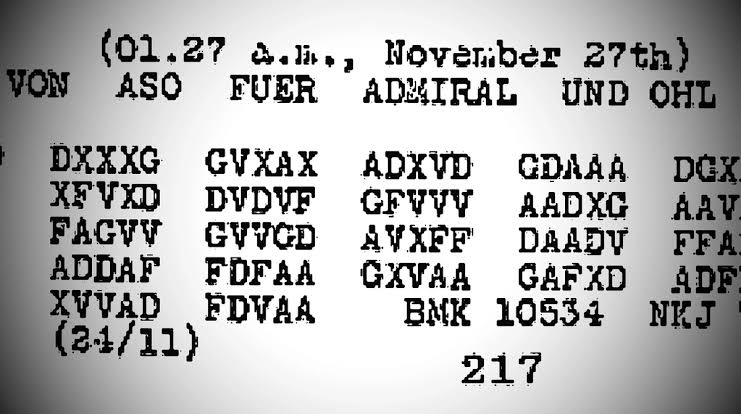
OpenAI’s GPT-6 Astra has reportedly decoded a 170-symbol German World War I radio transmission sent on November 27, 1918, according to a September 17, 2026 post by developer Prinz.
The message used the German ADFGVX field cipher, which first turns letters into pairs of A, D, F, G, V, and X, then rearranges those pairs. After decoding, the text pointed to British and Allied ship movements near Sevastopol.
What the message said
Prinz published this German plaintext:
EIN ENGLISCHER KREUZER EINLIEG X SEWASTOPOL X S4STEN X EIN GESCHWADER DER X ALLIIERTEN FOLGT 26STEN X
In English:
An English cruiser arrived at Sevastopol on the ?4th; an Allied squadron follows on the 26th.
The “X” marks were common separators in German military telegrams. The unclear digit in “S4STEN” was treated as a garbled “24th.”
How it was checked
Astra then compared the result with historical records. Logs show HMS Canterbury reached Sevastopol on November 24, 1918. An Allied squadron arrived on November 26, matching the decoded text.
The keyword used was TRUPPENVERSCHIEBUNG (“troop movement”), listed in J. Rives Childs’s The History and Principles of German Military Ciphers, 1914–1918. That key is documented around early December 1918, a few days after this message’s date. Prinz and later write-ups note that mismatch rather than hide it.
What this does — and does not — prove
The claim is notable because this short intercept, catalogued on page 217 of Childs’s collection, had apparently stayed unread for about 108 years, even though hundreds of similar ADFGVX messages were solved earlier by human cryptanalysts.
Caveats remain:
- The report comes from Prinz, not from an official OpenAI paper.
- The key was already in a published archive; the model applied a known keyword rather than inventing one from nothing.
- Independent cipher experts have not widely confirmed the solve yet.
Still, the recovered German is coherent, and the ship dates line up with Royal Navy records. That combination is why the story has spread.
Sources: Prinz, Cyber Kendra, Tom’s Hardware, Dexerto